How People Save Thousands Every Year Using Coupons & Cashback Apps
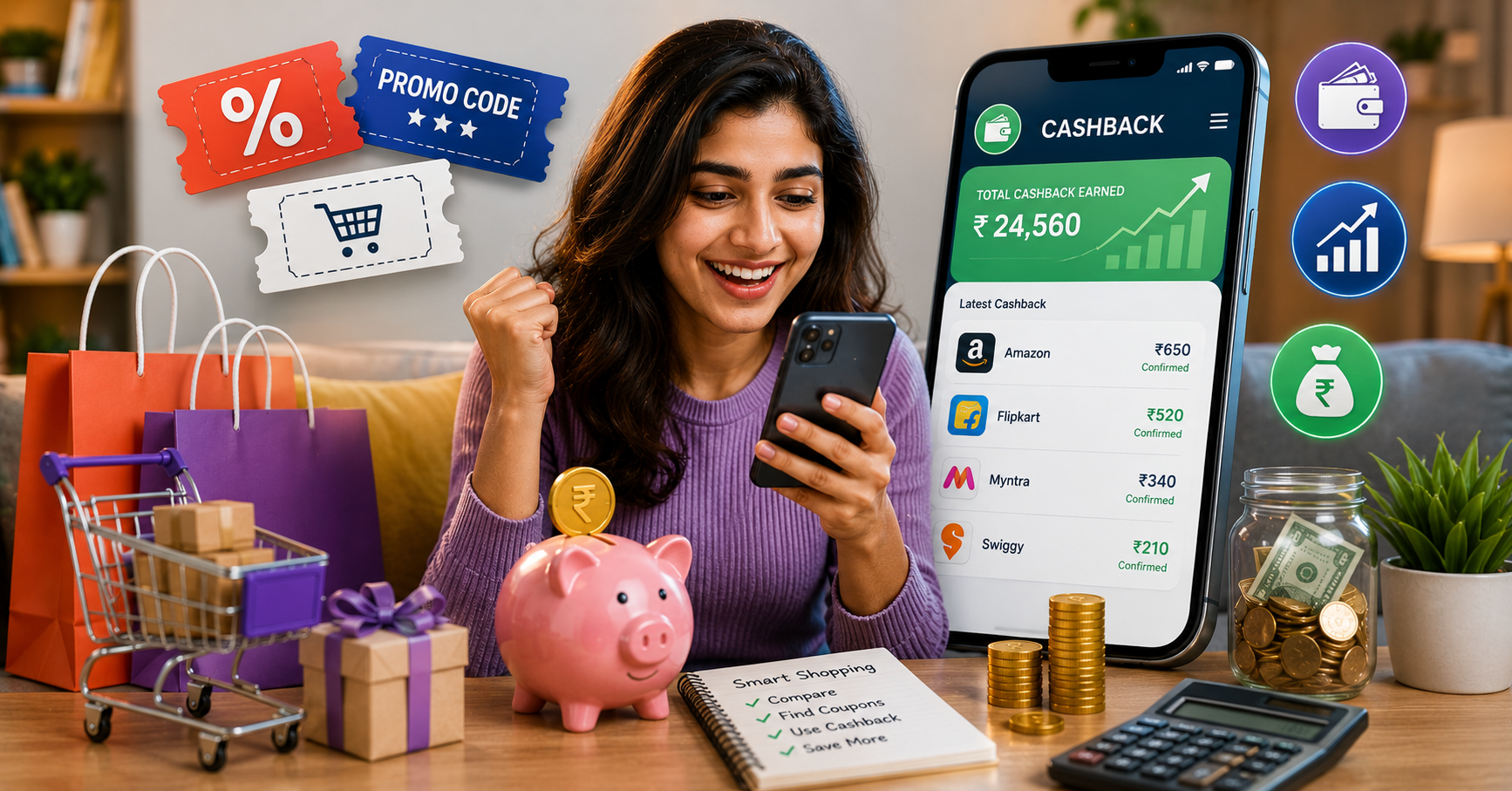
For decades, saving money was mostly associated with clipping newspaper coupons, waiting for seasonal sales, or bargaining at local stores. In 2026, the entire savings ecosystem has transformed — millions of people are now actively reducing their expenses using cashback apps, promo codes, digital coupons, reward platforms, loyalty systems, browser extensions, UPI offers, and app-based shopping incentives.
What once felt like "small discounts" has evolved into a sophisticated digital commerce ecosystem where consumers strategically optimise purchases, subscriptions, travel, food delivery, entertainment, utility payments, and even daily grocery spending. For many households, these systems collectively save hundreds, or even thousands of dollars and rupees every year.
But here's what most people misunderstand: the biggest savings rarely come from a single giant discount. They come from:
- behavioural optimisation,
- stacking rewards,
- timing purchases strategically,
- and understanding how modern reward ecosystems actually work.
At the same time, brands are not offering these incentives out of generosity. Coupons and cashback systems exist because user acquisition is expensive, retention is critical, competition is intense, and consumer attention has become one of the most valuable assets in digital commerce.
This guide explains how people save thousands annually using coupons and cashback apps, how modern savings ecosystems work, why companies aggressively promote rewards, how smart shoppers stack savings, the common consumer mistakes, and what the future of AI-driven shopping rewards looks like in 2026.
The Psychology Behind Why Discounts Feel So Powerful
Saving Money Triggers Emotional Reward
One of the biggest reasons coupons and cashback systems became so successful is psychological. Consumers don't just enjoy spending money — they enjoy feeling smart while spending money. A successful discount creates emotional satisfaction, perceived financial intelligence, and a sense of "winning" the transaction. This is why so many people become deeply engaged with reward systems, loyalty ecosystems, and deal-hunting communities — the dopamine of the win matters as much as the rupees saved.
Modern Commerce Is Built Around Incentives
Today's digital shopping experience is heavily gamified. Apps increasingly use points, streaks, exclusive unlocks, limited-time offers, cashback milestones, and referral bonuses to keep users engaged continuously. In many ways, shopping apps now behave more like gaming platforms than traditional stores — and that is by design, not accident.
Small Savings Compound Dramatically Over Time
Most consumers underestimate how quickly small savings accumulate. Saving ₹100 daily, or $2–$5 per purchase, can compound into substantial annual savings when applied consistently across groceries, transportation, subscriptions, food delivery, electronics, and utility bills. The math is the same as compound interest in reverse: small, boring, repeated wins beat one big spectacular one almost every time.
What Are Cashback Apps?
Cashback Apps Reward Spending Behaviour
Cashback apps return a percentage of user spending after a purchase. Instead of directly reducing prices the way coupons do, cashback systems typically refund part of the transaction value, reward app engagement, or incentivise platform loyalty. The discount is realised after the fact, not at the checkout moment — which changes both the consumer psychology and the brand economics.
Why Brands Pay Cashback
Many consumers assume cashback apps "lose money" by rewarding users. In reality, cashback exists because customer acquisition costs are extremely high, digital competition is intense, and user retention is valuable. Brands would often rather share a portion of revenue than lose a customer entirely to a competitor — and the cashback is usually cheaper than the equivalent ad spend it would take to win that customer back.
Cashback Is Fundamentally a Behavioural Strategy
The real goal of cashback isn't generosity. It is retention, repeat purchases, data collection, purchase-habit formation, and ecosystem dependency. The cashback itself is often the hook; the long-term customer relationship is the real prize. Knowing this doesn't make cashback a bad deal for the consumer — it just clarifies what is actually being exchanged.
How Coupons Work in Modern Commerce
Coupons Reduce Purchase Friction
Coupons help users overcome hesitation, price sensitivity, and checkout resistance. A small discount often psychologically pushes consumers toward completing a purchase they were already considering — and that nudge from "considering" to "buying" is exactly what the coupon is engineered to deliver.
Coupons Are Now Highly Personalised
Modern coupons are increasingly AI-driven, behaviour-based, and personalised. Different users may receive different offers, different pricing, and different reward structures based on browsing history, shopping behaviour, location, and spending patterns. The "public" coupon code that anyone can use is slowly being replaced by silently-targeted offers calibrated to each shopper.
Digital Coupons Are More About Data Than Paper Savings
Traditional paper coupons focused mainly on discounts. Modern digital coupons additionally generate behavioural insights, attribution tracking, and customer analytics. The data trail is often more valuable to the brand than the cost of the discount itself, which is one reason brands aggressively invest in reward ecosystems even when individual coupon payouts look generous.
How Smart Consumers Save Thousands Annually
They Stack Multiple Savings Systems
One of the biggest secrets experienced shoppers use is savings stacking. Instead of relying on only one discount method, they combine coupons, cashback, promo codes, loyalty points, referral rewards, gift cards, and bank offers simultaneously. The layers operate at different points in the checkout flow, so a well-stacked purchase can carry three or four overlapping discounts without violating any one platform's terms.
They Optimise Timing
Strategic consumers often wait for seasonal sales, festive campaigns, app-exclusive discounts, or bank partnership offers before placing big-ticket purchases. Timing correctly can significantly reduce electronics costs, travel expenses, and subscription fees — buying a laptop in February instead of waiting for the year-end sale is usually a more expensive choice than the urgency suggests.
They Build Ecosystem Familiarity
People who consistently save large amounts deeply understand platform behaviour, app patterns, reward timing, and loyalty systems. They know when rewards increase, which apps stack best, and which payment methods unlock maximum value. This kind of ecosystem fluency is the actual competitive advantage — far more than knowing a specific coupon code.
Why Cashback Apps Became So Popular
Inflation Increased Savings Awareness
Rising living costs globally pushed consumers to become more price-conscious, reward-sensitive, and financially strategic. Even middle-income users increasingly optimise subscriptions, groceries, and daily spending — the kind of careful budgeting that used to be associated only with very tight household budgets has become mainstream behaviour across income brackets.
Mobile Commerce Changed Consumer Behaviour
Smartphones made rewards instant, trackable, and accessible. Users now receive real-time offers, notifications, and dynamic promotions directly through apps — and the friction of "remembering to use a coupon" has been replaced by the app proactively surfacing the relevant offer at the moment of purchase.
Digital Payments Accelerated Reward Ecosystems
UPI systems, wallets, and fintech platforms expanded cashback adoption, reward gamification, and merchant integrations dramatically. A single UPI transaction can now trigger a payment, log a reward, apply a bank offer, and credit cashback — all in seconds, and all without the user actively managing any of it.
Most Common Ways People Save Money Using Rewards
Food Delivery Discounts
Many users strategically rotate between delivery apps, coupons, and payment offers depending on which platform is currently running the most aggressive promotion. The same biryani order can carry meaningfully different prices across two apps on the same evening — and noticing which is which is one of the highest-yield savings habits in everyday life.
Travel and Hotel Rewards
Flights and hotels often provide loyalty points, cashback, and seasonal discounts. Travel is also one of the categories where reward stacking compounds most dramatically — a credit card with travel multipliers, a loyalty program tier, a co-branded portal bonus, and a seasonal sale price can collectively reduce a holiday's cost by far more than any single discount lever would suggest.
Subscription Optimisation
Experienced consumers regularly optimise streaming subscriptions, app memberships, and software purchases using promotions, annual-plan switches, and family-share options. Subscriptions are the category where most households silently overspend — they renew quietly, they rarely get audited, and small monthly leaks add up to surprisingly large annual figures.
Credit Card and UPI Offers
Many banks aggressively incentivise app usage, digital payments, and partner purchases. Banks pay these rewards because they benefit from increased transaction volumes, longer customer relationships, and richer transaction data — the cashback you receive is essentially the bank sharing a fraction of the value it captures from your activity.
Biggest Mistakes Consumers Make
Buying Unnecessary Products Just for Discounts
One of the biggest psychological traps is spending more to "save more." A discount isn't beneficial if the purchase itself was unnecessary. A 40% off code on a ₹3,000 item is not ₹1,200 saved — it is ₹1,800 spent on something that was not on the shopping list this morning. The cleanest test is whether you would have bought the item at full price next month.
Ignoring Cashback Expiry Rules
Many users lose rewards because they forget redemption windows, misunderstand conditions, or fail to activate offers properly. The reward is earned at the transaction but only paid out after a confirmation period, and platforms often expire unclaimed balances after a fixed window — a small calendar reminder is usually enough to recover the leak.
Using Too Many Apps Without Strategy
Some consumers become overwhelmed managing dozens of reward apps, scattered points, and inconsistent systems. Smart optimisation matters more than quantity. Two or three platforms used consistently almost always beats ten platforms used occasionally — the wins are in routing routine spending through a small, familiar set of tools, not in installing more apps.
Couponing Culture Has Changed Dramatically
Traditional Couponing Was Manual
Old-school couponing required newspapers, clipping, and physical redemption. The activity was meaningfully effortful — which is partly why the people who did it well saw real returns: scarcity of attention created the savings.
Modern Couponing Is Algorithmic
Today's reward systems are increasingly automated, AI-personalised, and dynamically optimised. The coupon that surfaces in your app feed has been picked from thousands of options based on your behavioural profile — and the same shopper can see different "best" offers across different sessions of the same app.
Social Media Accelerated Deal Discovery
Communities now share hidden offers, loopholes, stacking techniques, and limited-time rewards instantly across YouTube, Instagram, Reddit, Telegram, and short-form content platforms. Deal discovery has become a real-time social activity rather than a solitary newspaper-clipping ritual — which both speeds up consumer learning and accelerates how quickly brands close the loopholes that get publicised.
How AI Is Changing Cashback and Rewards
AI Predicts Consumer Spending Behaviour
Platforms increasingly use AI to forecast purchases, personalise discounts, and optimise user retention. The system can often predict what you will buy next with surprising accuracy — and the reward you see has been chosen to nudge that prediction toward conversion at the smallest possible cost to the platform.
Dynamic Pricing and Personalised Coupons Are Expanding
Different users may increasingly see different offers, different cashback rates, and different pricing structures based on their behavioural profile. The old model of one public coupon code for everyone is quietly being replaced by silently-different prices for silently-different shoppers — which has real consumer implications worth thinking about.
Shopping Assistants May Automate Savings
AI shopping assistants may soon automatically apply coupons, optimise purchases, and identify the best reward combinations instantly — taking the manual effort out of stacking entirely. The same technology that personalises offers against you can be used to optimise offers for you, and the next few years of consumer-side AI tooling will probably decide which side wins that arms race.
Why Businesses Prefer Rewards Over Direct Price Cuts
Rewards Feel More Engaging Than Permanent Discounts
Permanent price cuts reduce perceived product value — a brand that always discounts by 30% trains shoppers to wait for that discount forever. Rewards create excitement, urgency, and engagement instead — they feel like a benefit rather than a baseline price reduction, which is more psychologically defensible for the brand's long-term pricing power.
Reward Systems Encourage Repeat Behaviour
Coupons and cashback systems increase retention, app opens, and purchase frequency. The same money that a flat discount would have given away once instead pays for repeated engagement — which is a far better return for any brand that cares about lifetime customer value rather than a single transaction.
Loyalty Ecosystems Are Extremely Profitable
Many companies generate enormous long-term value through ecosystem dependency, memberships, and repeat purchasing patterns. The cashback you receive today is essentially the brand pre-paying for the loyalty it expects to receive over the coming years — which is why reward economics make business sense even when individual payouts look generous.
The Rise of "Savings as a Lifestyle"
Consumers Are Becoming More Strategic
People increasingly treat deal optimisation, cashback stacking, and reward management as part of financial planning rather than as an occasional bargain hunt. The behaviour has graduated from "what coupons exist today" to "which platforms should I route my spending through this year" — a meaningfully more sophisticated frame.
Communities Around Savings Are Growing
Entire online communities now focus on budgeting, smart shopping, and reward optimisation. The collective intelligence inside these communities often surfaces stacking techniques, regional offers, and edge-case redemptions that no single user would have found alone — which is why the most efficient savers tend to be active in at least one such community.
Saving Money Is Becoming Socially Shareable
Deal discovery now spreads rapidly through YouTube, Instagram, Reddit, Telegram, and short-form content platforms. The old stigma around publicly admitting one was "looking for a discount" has been replaced by a culture where smart saving is socially admired — which both accelerates good consumer behaviour and creates a new attention market for deal creators.
Best Practices for Maximising Savings
Combine Coupons With Cashback
Layering systems usually creates the highest savings potential. The coupon reduces the bill, the cashback returns a percentage of the reduced bill, and a payment offer can sometimes stack on top of both — three discount sources for the same single purchase, when the terms allow it.
Track Seasonal Sale Cycles
Understanding annual sales, festive campaigns, and platform-specific events (Big Billion Days, Great Indian Festival, end-of-season sales, year-end clearances) can significantly improve savings. Most categories have predictable annual peaks — buying outside them, on anything that isn't time-sensitive, usually means paying more than necessary.
Use Reward Ecosystems Intentionally
The smartest users approach cashback strategically rather than emotionally. They choose which platforms to consolidate spending through, they treat reward apps as financial tools rather than entertainment, and they regularly audit whether the time spent managing rewards is still proportional to the savings being generated.
Avoid Impulse Purchases
A discount only creates value when the purchase itself is useful. The honest test is whether you would have bought the item at full price within the next month — if not, the discount has converted you into a buyer the brand wanted, not saved you money you would have spent anyway.
Coupon vs Cashback: What's the Difference?
Coupons and cashback both reduce what you pay, but they operate on opposite ends of the timing-and-psychology spectrum. The table below maps the five dimensions on which they diverge.
| Feature | Coupons | Cashback |
|---|---|---|
| Immediate Savings | Yes | Usually delayed |
| Applied at Checkout | Yes | Usually post-purchase |
| Main Goal | Conversion boost | Retention & loyalty |
| User Psychology | Instant gratification | Reward accumulation |
| Brand Benefit | Faster purchases | Repeat engagement |
Coupons and cashback are only two of the four reward instruments that show up across modern checkout flows — vouchers and gift cards work differently again. For the full breakdown of how all four compare, see our companion guide on the actual difference between coupons, promo codes, vouchers, and gift cards.
What Most People Don't Realise About Reward Ecosystems
The Biggest Savings Usually Come From Habits
Long-term savings often depend more on consistency, planning, and behavioural discipline than on giant one-time discounts. The shopper who saves 5% on every transaction across a full year almost always outperforms the one who waits for occasional 50% off events and pays full price the rest of the time — the compounding math heavily favours the boring strategy.
Brands Compete Aggressively for Consumer Attention
Most reward systems exist because user acquisition is expensive, competition is fierce, and retention is critical. The "free cashback" you receive is the visible part of an enormous, mostly-invisible competitive market between platforms trying to keep you inside their ecosystem rather than a competitor's — and consumers who understand this are better positioned to negotiate the relationship.
Modern Shopping Is Becoming AI-Driven
The future of commerce is increasingly personalised, predictive, and incentive-optimised. The same shopper now sees different prices and different offers in different sessions, on different days, on different devices — and the gap between the rate a casual user gets and the rate a strategic user negotiates is likely to widen as AI personalisation gets better at price-discriminating between them.
Quick Summary: How People Save Thousands Using Cashback and Coupons
| Strategy | Impact |
|---|---|
| Stacking discounts | Maximises total savings |
| Using cashback apps | Generates recurring rewards |
| Timing purchases strategically | Reduces major expenses |
| Leveraging loyalty systems | Improves long-term value |
| Avoiding impulse buying | Prevents fake savings |
| Tracking offers intelligently | Increases efficiency |
Frequently Asked Questions (FAQs)
Do cashback apps really save money?
Yes, when used consistently — though the framing matters. The biggest savings rarely come from one giant cashback hit; they come from compounding small percentages across many transactions you would have made anyway. A user who routinely runs grocery, food delivery, travel, and electronics spending through cashback platforms typically saves a meaningful chunk of annual spending over time. The catch is that cashback only adds value when the underlying purchase was already planned — spending more to "earn more cashback" cancels the math instantly.
Can coupons and cashback be combined?
Often yes — and stacking is where the biggest savings come from. Many platforms let you apply a coupon or promo code at checkout to reduce the bill, while a separate cashback layer tracks the purchase and returns a percentage afterward. Bank offers and UPI promotions can sometimes stack on top of both. The limits depend on each platform's terms: some retailers explicitly block cashback on discounted orders, and some payment offers exclude promo-code purchases. Reading the fine print on both sides before assuming a stack will work is the difference between a good saver and a great one.
Why do companies offer cashback?
Because acquiring a new customer through ads now costs significantly more than sharing a small percentage of an existing customer's spend. Cashback is one of the cheapest retention tools available: it keeps users inside an app, it generates valuable transaction data, and it makes switching to a competitor psychologically harder. Brands would rather pay you 2–5% back than pay an ad network 10–15% to re-acquire you after you defect. The cashback is the visible benefit; the long-term customer relationship is the actual product the platform is buying.
Do people actually save thousands using reward systems?
Heavy, intentional users genuinely do. The savings come from three compounding factors: stacking multiple reward layers on each purchase, timing major buys around sale events, and routing routine spending (groceries, utility bills, food delivery, subscriptions) through reward platforms by default. Casual users who only check for a coupon when they remember to typically save modest amounts. The difference between modest and substantial savings is rarely the discount sizes — it is the consistency and the number of spending categories run through the reward layer over a full year.
Are cashback apps free?
Most are free to join and use, with no membership cost to access standard cashback rates. The trade-off is that platforms monetize through advertiser commissions, partner brand payouts, and the transaction data they collect as you shop. Some platforms add optional premium tiers that unlock higher rates, faster payouts, or exclusive offers in exchange for a fee. For most users, the free tier already delivers meaningful value — premium tiers usually only pay off for very high-volume shoppers who route most of their spending through one ecosystem.
What is the biggest mistake people make with discounts?
Buying things they did not actually need because the discount made the purchase feel like a win. A 40% off coupon on a ₹3,000 item is not a saving if the item was not on your shopping list to begin with — it is just spending ₹1,800 you were not planning to spend. The same trap applies to "buy 2 get 1 free" deals, festival flash sales, and "lowest price ever" notifications. The honest test is whether you would have bought the item at full price next month; if not, the discount is the marketing, not the saving.
Conclusion
Coupons and cashback apps have evolved far beyond simple discount tools. In 2026, they are part of a massive digital commerce ecosystem shaped by behavioural psychology, AI-driven personalisation, fintech innovation, mobile commerce, and reward-based consumer engagement. The discount you see at checkout is rarely just a discount — it is a carefully-engineered nudge that has been chosen for you, by a platform that has business reasons for offering it.
The people who save the most money are usually not those chasing random discounts. They are the consumers who understand how reward systems work, how platforms influence spending behaviour, and how to optimise purchases strategically over time. The shift from "what's on sale" to "which ecosystem should I route my spending through" is the real transition that separates casual savers from the ones who genuinely save thousands annually.
At the same time, brands continue investing heavily in cashback, loyalty systems, coupons, and rewards because modern commerce increasingly depends on retention, engagement, and long-term ecosystem loyalty. As AI-driven commerce expands further, the future of shopping is likely to become even more personalised, reward-centric, and behaviourally optimised than ever before.
If you want a single reward layer that compounds quietly underneath your everyday spending — without juggling a dozen scattered apps — you can start earning cashback, gift cards, and cash on PocketsFull through surveys, offers, and tasks, with transparent payout rules and no upfront cost.